


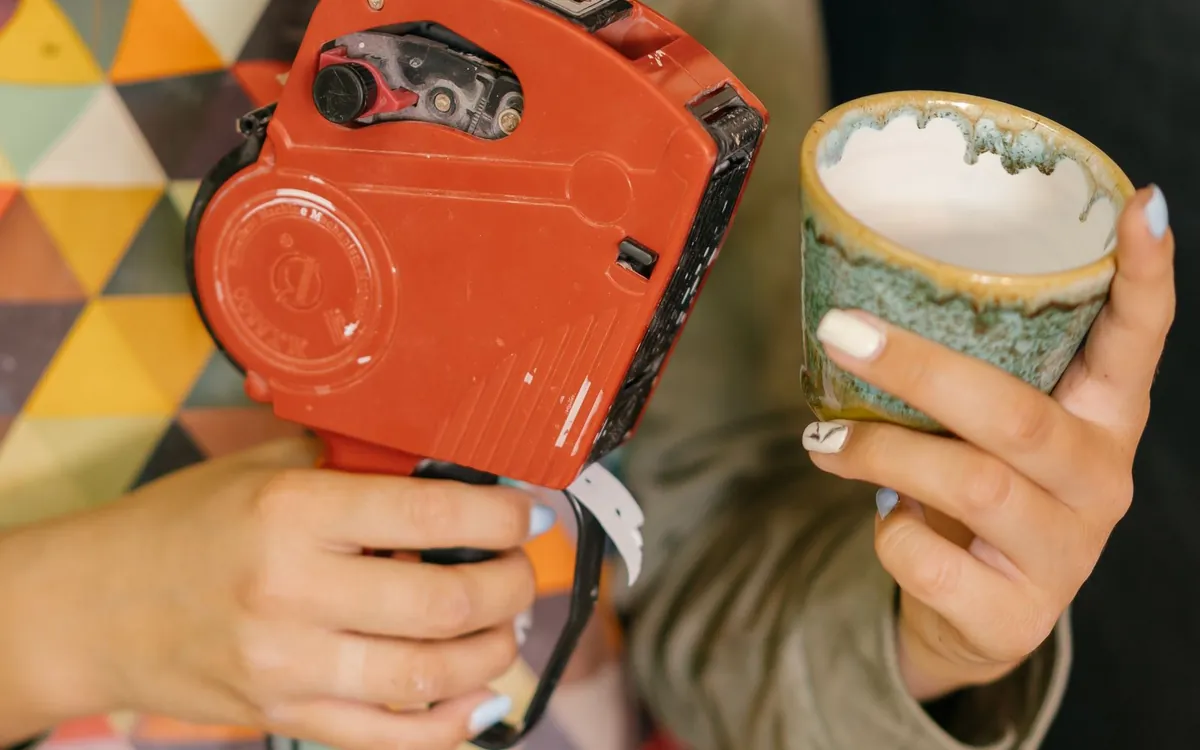
To price a handmade item, add five things: materials, your time, a share of your overhead, payment and shipping fees, and profit. Leave out any one of them and you're working for free without noticing. Below is the formula with a full example for a hand-painted mug.
Step 1 · Materials per item
List everything that goes into one unit at today's prices: the blank mug, paint, sealant, box, tissue paper and label. If you buy in bulk, divide. A $6 paint that covers 20 mugs is $0.30 per mug.
Step 2 · Your time
Time one item from start to finish, including packing and answering the customer. Pick an hourly rate (the least you'd accept for similar work) and multiply.
Step 3 · Overhead
Electricity, internet, kiln or oven, shop platform, phone. Add them up per month and divide by the number of items you sell in a normal month. $60 of overhead over 40 mugs is $1.50 per mug.
Step 4 · Fees
Card processors, payment links and marketplaces all take a cut. Add it to the price instead of taking it out of your profit. Same with shipping if you cover it.
Step 5 · Profit
This is what lets the business restock, grow and survive slow months. 20 to 40% on top of cost is a common range for handmade goods, but your market decides.
Worked example: a hand-painted mug
- Materials: $4.50 (mug $3, paint and sealant $0.50, box and label $1).
- Time: 30 minutes at $6 an hour = $3.
- Overhead: $1.50.
- Total cost: $9.
- 30% profit: $2.70. Price before fees: $11.70.
- Payment link fee (say 5%): final price of about $12.30.
If mugs like that sell for $8 where you live, the problem isn't the price, it's the cost. Lower it (buy wholesale, simpler packaging) or sell it as a personalized gift, which people pay more for.
Pricing mistakes that cost you
- Copying someone else's price. You don't know their costs or whether they make anything.
- Using old material prices. Recheck every time you restock.
- Discounting a price that was already fair. Offer a bundle instead.
- Never raising prices. See how to raise prices without losing customers.
For the general formula and margins, read how to calculate selling price, and use the break-even point to see how many items you need to sell to cover your investment.
Frequently asked questions
Materials + labor + a share of overhead = cost. Add your profit on top, then payment and shipping fees.
20 to 40% over cost is a common range, but it depends on your market and how long each piece takes.
Yes. Your time is a cost even if no money leaves your pocket.
Wrapping up
Take your best-selling item and run the five steps with today's costs. If the result is higher than what you charge, now you know why money feels tight.
Next step: run it in Precio Justo. And if saying your price out loud is the hard part, Charge What You're Worth has the scripts.